

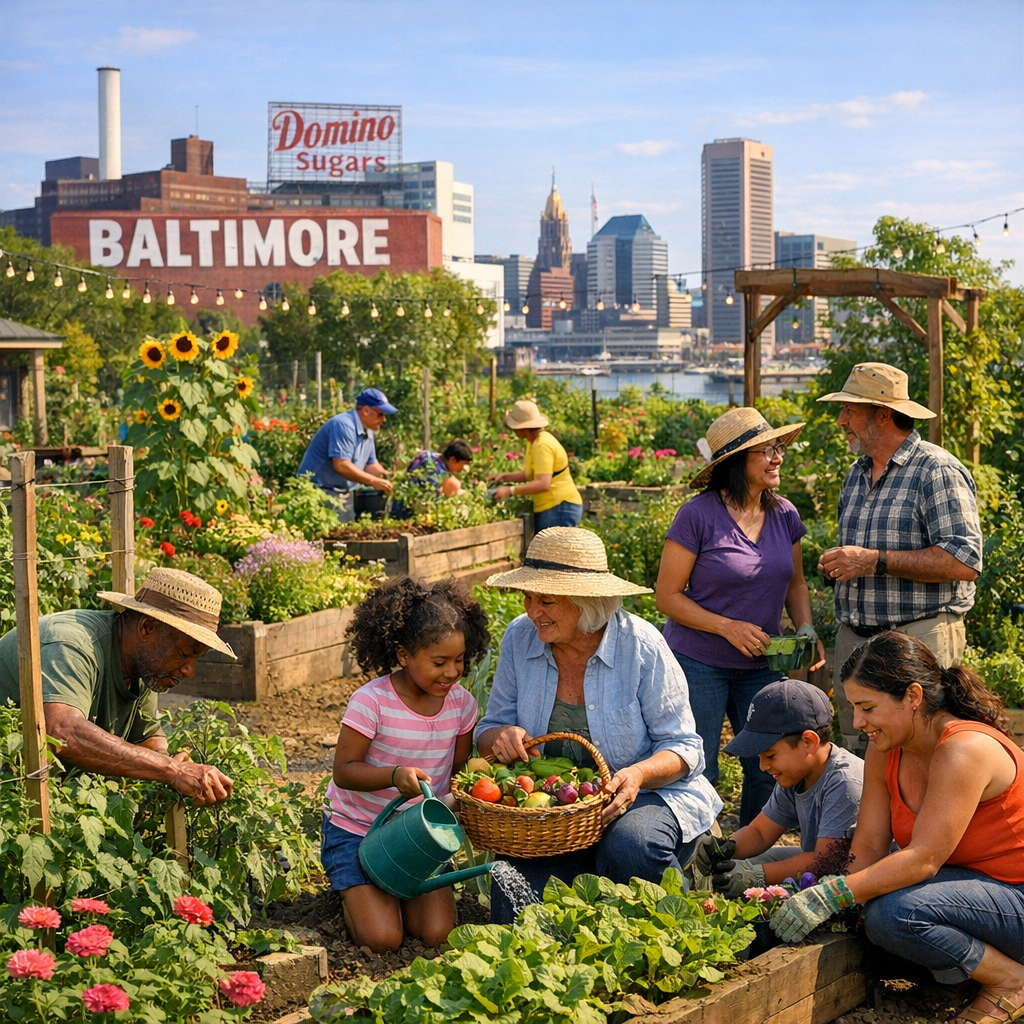
In the heart of Baltimore, a green revolution is taking root. Community gardens are sprouting across the city, turning vacant lots into vibrant spaces that nourish both the body and the spirit. These gardens are more than just plots of land; they are hubs of community engagement, education, and environmental stewardship.
The Blossoming of Community Gardens
One such example is the Ashland Community Garden, which aims to enhance the health of the community and the environment. It provides food security for many low-income individuals and promotes environmental awareness through community education.
Similarly, the Homeland Garden Club, established in 1926, has been a cornerstone of Baltimore’s gardening community. Celebrating its centennial, the club continues to foster education and sustainability through workshops, garden tours, and hands-on projects.
Educational Opportunities and Volunteerism
Community gardens also serve as educational platforms. Blue Jay’s Perch, Johns Hopkins University’s community garden, offers a space for both community members and university affiliates to learn and practice sustainable food production methods. The garden welcomes volunteers and provides a chance to connect with nature.
In the Harwood neighborhood, the Harwood Community Garden has been growing food since 2017. With 22 raised beds, the garden operates on a communal basis, inviting the public to “take what they want, but eat what they take.” This initiative not only provides fresh produce but also educates residents about the food they consume.
Environmental Impact and Sustainability
Beyond providing fresh produce, these gardens contribute to environmental sustainability. The Mount Washington Arboretum Community Vegetable Garden emphasizes permaculture projects that reduce waste and integrate the garden with the surrounding ecosystem. By avoiding pesticides and chemical fertilizers, the garden serves as a resource for learning about environmentally friendly gardening practices.
Fostering Community Bonds
Community gardens also play a crucial role in strengthening neighborhood ties. The Barclay Oliver Garden, also known as “The BOG,” has transitioned from raised beds into an inviting green sanctuary. It hosts community events like “Stoop Nights,” where neighbors gather to connect and learn more about their community.
In South Baltimore, the Filbert Street Community Garden has transformed an overgrown lot into a space for recreation and education. The garden features goats and a native garden, attracting visitors and fostering a sense of community.
Conclusion
The proliferation of community gardens in Baltimore reflects a growing movement towards sustainable living and community engagement. These green spaces not only provide fresh produce but also serve as educational platforms, environmental stewards, and community hubs. As more residents get involved, Baltimore’s community gardens will continue to flourish, cultivating a healthier and more connected city.